The Changing Landscape of Cocoa Sourcing: Part 2
When evaluating a cocoa sourcing partner, two good places to start are: know your supplier and being clear about how you communicate your stances on key issues to yourself, your employees, your suppliers, and your customers. Part 2 of 4 parts.
Before You Begin ⋯
⋯ it makes sense to read Part 1.
 Clay Gordon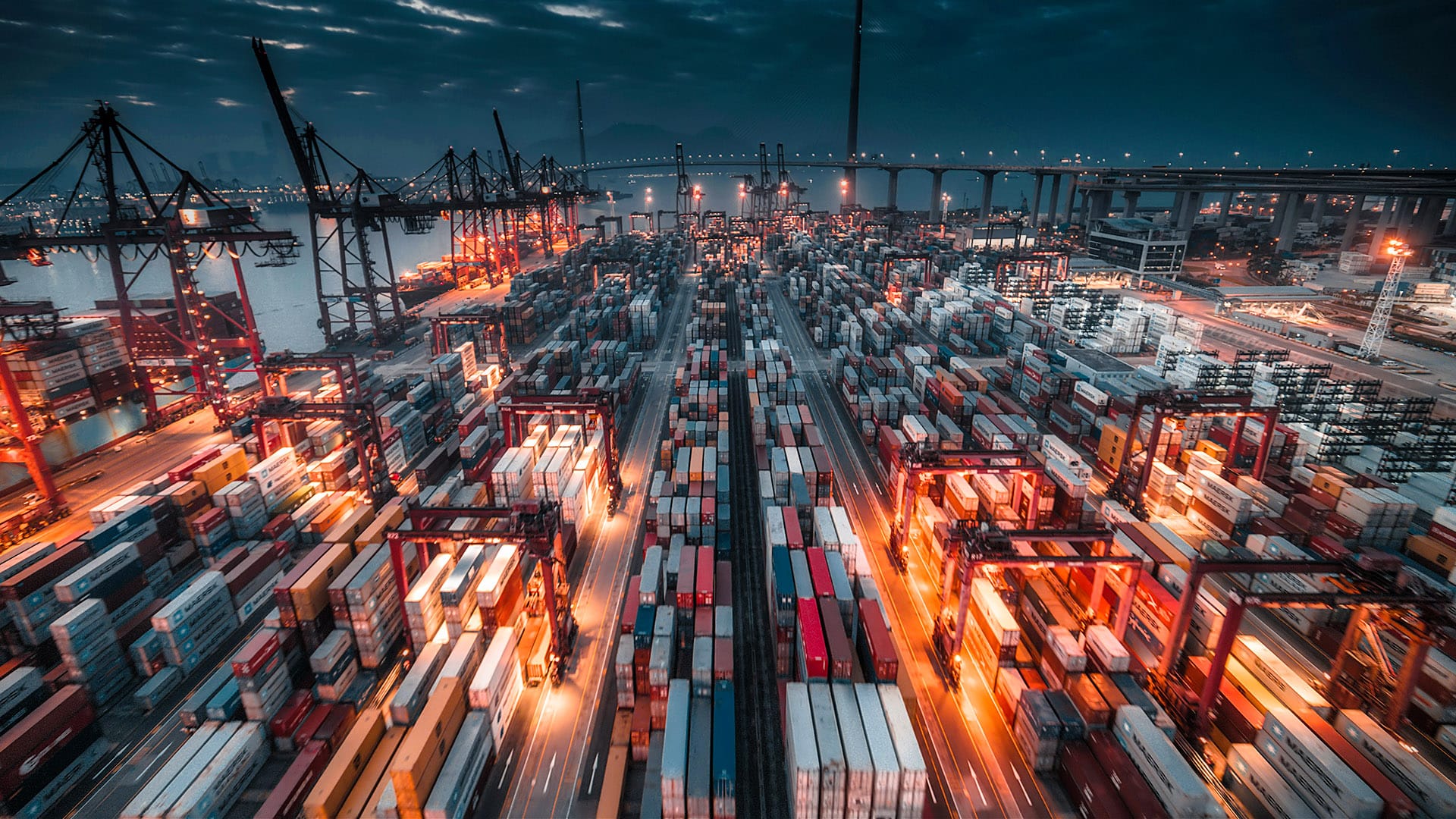
But, if you want to dive right in or need a recap, here’s a summary:
- Thesis: Exploitation in cocoa persists after two centuries of “ethical” efforts in part because certifications and consumer-facing fixes largely commodify morality without altering structural power relationships in global trade.
- Historical arc: Early Quaker chocolate makers framed cocoa as “innocent trade,” yet the São Tomé slavery scandal (1901–1908) exposed flaws in this stance. The forty-year post-1910 “silence” that followed can be blamed largely on two world wars and the Great Depression diverting consumer attention away from slavery issues, lingering colonialism that made uncovering and communicating the truth challenging, and industry consolidation.
- Ethics as market category: The late-20th-century rise of (so-called) “fair” trade effectively built awareness and infrastructure while creating a two-tier market that outsourced moral responsibility to consumers, and enabling corporate greenwashing via the “certification industrial complex.”
- Specialty chocolate’s promise and entanglement: Bean‑to‑bar/Craft/Specialty values (including direct trade, transparency, paying premiums, community-led projects) became differentiators, yet logistics and manufacturing dependencies tie many “ethical” actors to multinationals (e.g., trading arms and processors), blurring the lines between specialty and industrial supply chains.
Key Takeaways:
- Ethical labels can mitigate harms and raise awareness, but they can also reinforce rather than transform existing systems. “Meaningful change demands shifts in power, not just premiums and paperwork.”
- “You cannot [emphasis added] separate the morality of consumption from the morality of production.”
Evaluating Suppliers
Point 4 above is a stark reminder that, in the nearly 30 years since the beginning of the bean-to-bar chocolate movement (since Scharffen Berger opened their doors), the vast majority of specialty/craft chocolate makers depend on multinationals to some extent for logistical support. Even companies that directly trade with their farmers depend on others to transport their beans from farming communities to the port of export, for ocean and air freight, for customs clearance services, and often to move the beans from the port of entry to their factory.
The paths that beans can take from the farm to the factory differ wildly. Within the same producing country, one path might be straightforward, involving relatively few intermediaries; in contrast, another path might involve the beans changing hands many times, making guarantees of provenance difficult to make, even before considering the risks of smuggling and deliberate deception.
For many specialty/craft makers, a specialty bean supplier (e.g., Cacao Latitudes, Cocoa Supply, Daarnhouwer, Gaia Cacao, Meridian, Silva Cacao, Uncommon Cacao, etc.) oversees all aspects of logistics, bundling the cost of these services, including providing necessary documentation, into the delivered price that makers pay.
Diving Down the Rabbit Hole
One challenge specialty/craft chocolate makers have when making sustainability and other claims is that they must rely on the representations of their suppliers.
While not directly analogous, consider the case of what might prevent a vegan chocolate from being vegan. [Beat] Did you consider sugar? Much refined (white) sugar is made from cane juice that has been filtered through charcoal that might contain animal remains. Juice coming into contact with animal remains is contaminated and is no longer considered vegan.
One question to ask yourself is, “How can/should/do I apply ‘vegan sugar logic‘ to other ingredients, consumables, suppliers, transport, and so on? ” Another is, “How far down that rabbit hole do I want to explore? ”
I have been publicly exploring this conundrum in posts and podcasts since 2021, and privately for many years before that.
 Clay Gordon
Everywhere you look, there are tangled webs of relationships. The predecessor article and criteria for inclusion are in this post. If you want to live a Nestlé-free life, you can’t drink Pellegrino.
Expanding on the vegan question and assuming you make vegan chocolate, what is your position on container boats and vehicles that are powered by petroleum distillates (which may also contain animal remains)? Even if you are using 100% renewable energy, what about petroleum-based lubricants? If you use any adhesives – are they all vegan?
You can see that following this logic to its conclusion is to ask questions about infinite regression and brute facts; where do you, personally, draw the line?
An Industry Poster Child (But Not in a Good Way)
A direct example in chocolate is that while Tony’s Chocolonely’s cocoa bean supply chain may be independent of Barry Callebaut’s, does the connection with Callebaut “contaminate” the cocoa butter and chocolate made using Tony’s beans?
- Similarly, Blommer is now owned by Fuji Oil. Blommer/Fuji has a 24% rating in the 2025 Chocolate Scorecard.
- Internet startup sensation TCHO is now owned by (Ezaki) Glico. Glico, one of the largest snack companies in the world, has an overall 11% rating in the 2025 Chocolate Scorecard, with the lowest grade in five of six categories.
Cacao Latitudes and ECOM Agro-Industrial
To tie this thinking directly to cocoa, Cacao Latitudes is, de facto, if not de jure, a subsidiary of ECOM. Even if Cacao Latitudes does treat its farmers “more ethically” than ECOM’s other cocoa sourcing operations, does ECOM’s scale (reportedly trading over 250,000 MT of cacao) enable Cacao Latitudes to profit from privileged pricing (and access) ECOM benefits from?
How much cocoa does Cacao Latitudes handle? I could not find any reporting. But, if it’s just 1% of ECOM’s total, that would be over 2500MT – a lot of beans for a dedicated specialty cocoa distributor given the size of the overall market.
“But Clay,” you say, “ECOM has a 55% rating on the 2025 Chocolate Scorecard; surely they can’t be all that bad.” To which I say, refer to points 3 and 4 above and consider: “How much of ECOM’s 55% score might be attributable to Cacao Latitudes?” There is no separate scoring so there’s no way to know and neither of the companies is proactively talking.
I am not saying they are. I am asking you what you think. And whether it affects your decision-making.
I don’t have any special insider information, here. I rely on publicly available information, filtered through experience, search skills, and analytical skills honed over decades.
I am not telling you what to think or what to do. I am suggesting that you think skeptically and critically, and to not take claims at face value. Fact-check and do your due diligence.
Only Googling (or using ChatGPT the same way you use Google) is not doing research because you don’t (and probably can’t) know the quality of the sources.
Maker: Know Thyself
An idea that is implied in the above is that you need to have definitions for key concepts. Before you communicate with customers and evaluate suppliers, you and your employees need to have clear, concise descriptions of what you mean when you use key words.
It’s also important that your employees, website, and all your marketing communications materials convey those values to your customers in a logical, consistent, and coherent fashion.
You want your suppliers to be in alignment with your values.
For example, if a big part of your brand is treating farmers well, then sourcing from a bean supplier that is owned by a multinational that has been a defendant in a lawsuit alleging they knowingly profited from slavery may not be a good fit for you.
Morals and Ethics
What do you mean when you use the phrase ethically sourced or ethically produced?
One thing to take into consideration is that morals and ethics are not synonymous. One way to think about the difference is to consider what is important to you and what is important to your peers.
- Morals are individual convictions shaped by upbringing, culture, and conscience. They answer “What do I, personally, believe is right?”
- Ethics are systematized standards that can be debated, justified, and applied across cases. They answer “What rules should we, as a group, follow, and why?”
A foundation that I like for building definitions is based in an interpretation of The Hippocratic Oath:
Primum non nocere – First, do no harm.
Note: The literal phrase is not in the original. The closest that can be found in the text is “I will abstain from all intentional wrong-doing and harm.”
Another way to phrase this might be, “To be ethical means not to take unfair advantage of a power imbalance.”
Sustainable, Sustainability
What do you mean when you use words like sustainable and sustainability?
A foundation for communicating commitment around sustainability that I like is:
To be sustainable means, “Meeting the needs of the present without compromising the ability of future generations to meet their own needs.”
This definition, popularized by the 1987 Brundtland Commission report titled Our Common Future, proposes an integrated approach considering environmental, economic, and social dimensions. The UN SDGS are, IMO, an overly complex and complicated framework for implementing this formulation of what sustainable and sustainability are.
 United Nations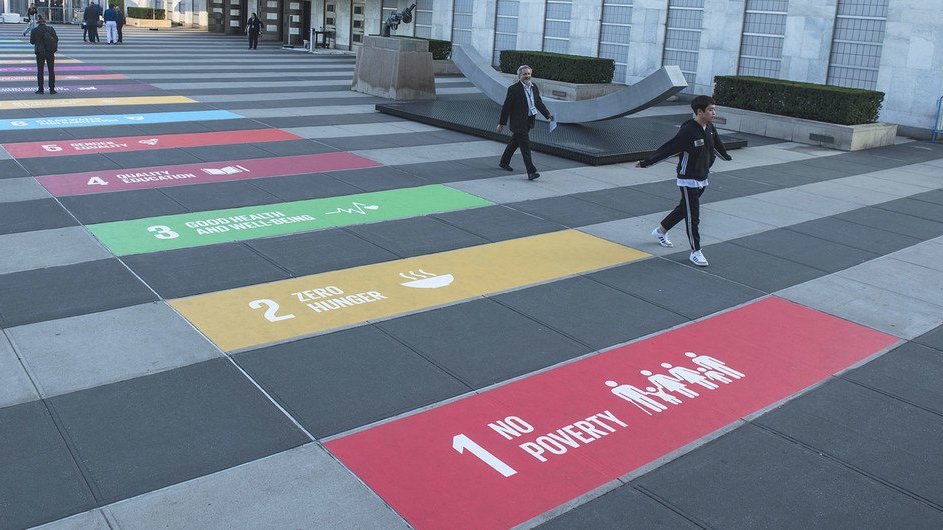
Keeping in mind that sustainable development and sustainability are not straightforward in practice.
 Clay Gordon
Approaches
A great way to explore these two topics is to create tables that list your evaluation criteria and your peers and/or suppliers. You can learn a lot by examining the language that others use and either incorporate that language directly or create a synthesis using a tone that is consistent with all your brand communications.
| Peer 1 | Peer 2 | Peer 3 | Peer ... | |
| Criterion 1 | ||||
| Criterion 2 | ||||
| Criterion 3 | ||||
| Criterion ... |
| Supplier 1 | Supplier 2 | Supplier 3 | Supplier ... | |
| Criterion 1 | ||||
| Criterion 2 | ||||
| Criterion 3 | ||||
| Criterion ... |
Caveat
In Point 3 above, “Ethics as market category,” a key takeaway is that the certification industrial complex has made it easy for companies to outsource their ethics and sustainability claims to third parties.
Imagine that among your ethics and sustainability criteria is the requirement to be “Fair” trade certified. It is now incumbent upon you to verify that the certification you are citing does, in fact, deliver the benefits it claims to deliver to your sources (i.e., farmers). At the risk of being cliche:
Follow the money.
If the reporting on a topic is thin or non-existent, that should be a red flag warranting further scutiny. I first encountered this red flag in 2011 when I contacted the then External Relations Coordinator for Fairtrade International, asking about how they arrived at the numbers they were reporting for premiums paid. While a global figure was given, they could not provide the numbers by country that rolled up to the global total, citing wholly unconvincing (to me, as someone with significant database expertise) excuses.
WTAF?
That correspondence lasted for about a year. I have not trusted “Fair” trade numbers since.
In Part 3:
The topics to be addressed in the next article in this series are:
- Evaluating Suppliers. I will be looking at some bean suppliers and walking you through some of the criteria I think make sense to consider (and how) when you are evaluating them. (Spoiler Alert: Price is not in the Top Three criteria on my list; it’s more of a tie-breaker.)
- The Role of Technology. Traceability is often lumped into discussions of sustainability, so how should you take a look at claims about technologies like blockchain?
In Part 4:
Part 4 will be an episode of #PodSaveChocolate dedicated to reviewing of Parts 1–3, plus additional thoughts and guidance on assessing cocoa supply chain partners.
Comments? Questions?
Leave them in the Member Discussion below.