Episode 192 of #PodSaveChocolate takes a look at the recent formation of the UK Cocoa Coalition, which hopes to influence the implementation of the UK Forest Risk Commodities regime. OR, is it Brexit-induced EUDR FOMO?
🗓️
Episode 192 streamed on Tuesday, March 31st, 2026.
Click a link below to view the archived episode.
🗒️
This post was updated on Wednesday, April 1st, to include the link to the UKCC post on LinkedIn with an embedded PDF that (IMO) does not clarify the most important issues I discussed in the episode. I have also included the link to Cocoa Radar coverage on this topic.
This YOUTUBE link is shareable.
Watch and comment LIVE or view the archived episode!
Subscribe (free!) to the @PodSaveChocolate YouTube channel, like this video, comment, and share this episode to help grow the #PSC community.
This episode of #PodSaveChocolate takes a look at a story that exploded in my feeds on Monday, March 30th (much of the information is behind registration paywalls, but I was able to retrieve it using other means):
This post appears to be free. There is more detailed coverage (behind a paywall) here.
Topics
What are the UK Forest Risk Commodities Regulations? Goals? Status?
🗒️
The UK Forest Risk Commodities rules are a not-yet-operational UK due‑diligence regime targeting illegally produced forest‑risk commodities.
What is the UK Cocoa Coalition? Who are its members, and what is its mission?
🗒️
The UKCC “launched” around International Day of Forests 2026 (specifically, on March 24th).
Members include major chocolate manufacturers (Barry Callebaut, Ferrero, The Hershey Company, Tony’s Chocolonely), large UK retailers (e.g., Sainsbury’s, Marks & Spencer, Waitrose), and prominent NGOs and trade bodies (Rainforest Alliance, Fairtrade Foundation, WWF, International Cocoa Initiative, IDH, VOICE Network, among others).
🗒️
Note: Take a close look for webs of potential conflicts of interest. For example, Antonie Fountain is a C-Suite employee of VOICE Network and is an advisor to Be Slavery Free’s Chocolate Scorecard; that affiliation is not acknowledged on The Chocolate Scorecard website.
🗒️
The coalition is not neutral; it is explicitly calling on the UK government to: a) bring the UK Forest Risk Commodities Regulation into force swiftly; b) align UKFRC closely with the EUDR, including a strong deforestation‑free standard; c) use the UKFRC as a lever to support farmer livelihoods, address human‑rights violations, and tackle illegal deforestation.
One of the key framings (in the announcement and reporting) is that “sustainability is no longer a competitive differentiator but an industry baseline.” That is a normative statement from industry and civil society that regulations like UKFRC/EUDR are becoming table stakes for market access and brand legitimacy, particularly for cocoa.
How is the UKFRC different from (and the same as) the EUDR?
🗒️
UKFRC – legality-based, “illegal deforestation” focus. The UKFRC is built around local legality, not an absolute deforestation ban: affected UK businesses must not use covered commodities if they were produced on land used or occupied in violation of local land‑use or land‑tenure law in the country of production.
🗒️
EUDR – no‑deforestation + legality. The EUDR combines an absolute deforestation cut‑off with a legality requirement. Products must be deforestation‑free, meaning they cannot come from land deforested after 31 December 2020, regardless of whether that deforestation was legal locally.
🗒️
Scope: covered (in-scope) commodities UKFRC: Cattle products (beef and leather; dairy excluded), cocoa, palm oil, soy. Products derived from these commodities are also covered (including “waste” and by‑products). Timber is excluded here because it is handled under separate UK timber rules. EUDR: Wood and wood products, soy, beef, palm oil, cocoa, coffee, rubber; plus a wide range of derived products (e.g., chocolate, leather, paper, some furniture).
🗒️
Scope: who must be in compliance UKFRC: Targets large, high‑volume UK users. Size threshold: global annual turnover > £50 million. Volume threshold: use of more than 500 tonnes/year of each in‑scope commodity; those using ≤500 tonnes may apply (not automatically) for an exemption. Covered activities include: producing, manufacturing, processing, distributing, selling, supplying, or purchasing covered commodities and derivatives as part of UK commercial activity (irrespective of the consumers’ location(s)). EUDR: Applies to operators and traders placing covered commodities and products on, or exporting them from, the EU market. There is no turnover or tonnage de minimis; instead, SMEs get somewhat simplified obligations, but they are still in scope. The obligations cascade across the supply chain (importers, manufacturers, traders), creating a wider net than UKFRC’s current design.
🗒️
Scope: compliance UKFRC: Affected businesses must implement a documented due diligence system and publish an annual report. That system must a) gather information on origin and supply chains; b) assess the risk that local land‑related laws were not complied with; c) take mitigation steps to address identified risks; and d) report annually on the system and its findings. EUDR: The EUDR’s due diligence model is significantly more data‑heavy: Operators must collect geolocation coordinates at the plot level for all production areas supplying the regulated products. They must conduct risk assessment and mitigation that explicitly considers both deforestation risk and legal compliance. This makes the EUDR both more intrusive and more technologically intensive than UKFRC, and it pushes supply chains toward granular, plot‑level traceability.
🗒️
Scope: enforcement UKFRC: Because implementing regulations are not in force, enforcement is still a designed but not fully detailed architecture. Legal analyses anticipate: Civil sanctions, including an unlimited monetary civil penalty for serious breaches, plus tools like stop notices and enforcement undertakings, and possible publication of non‑compliance; Targeted criminal sanctions for certain failures (e.g., failure without reasonable excuse to keep/supply required information); and Investigatory powers for the enforcement authority (expected to be the Secretary of State/DEFRA and designated agencies), including entry to premises, inspection of records, and potential seizure of products. But until secondary legislation is laid, these remain intentions, not fully specified rules. Under the EUDR, Member States must provide for penalties that are: Effective, proportionate, and dissuasive, including: Fines up to 4% of EU turnover; confiscation and/or destruction of non‑compliant goods; exclusion from public procurement; potential market‑access restrictions or bans.
What is the overlap with the recently announced TogetherCocoa foundation?
🗒️
Apart from having one co-member (The Hershey Company), the focus of the UKCC is broader than TogetherCocoa.
Adapted from above: [the UKCC plans to lobby UK regulators to] use the UKFRC as a lever to support farmer livelihoods, address human‑rights violations, in the process of tackling illegal deforestation.
Who benefits financially? Who foots the costs of compliance?
🗒️
Financially? Not farmers. In the EUDR, the real winners are the companies supplying the technologies used for satellite surveillance and hardware and software necessary to perform compliance reviews. UKCC members will use their efforts to secure additional financial support (NGOs) and market greenwashing to customers.
Farmers will not benefit unless specific targets that provide living wages are implemented in the regulations. (Which may not be legally enforceable in countries like Ghana.)
Who will foot the bill? Ultimately, consumers, taxpayers, and farmers.
Can the UKFRC, like the EUDR, be considered a form of economic imperialism?
🗒️
YES! It’s a group of actors – megacorporations, governments, and NGOs – that are not domiciled in producing countries trying to impose regulations on actors in producing countries without including them in the decision-making processes.
Is it too little, too late?
🗒️
Probably.
Is it the (or even a) right thing to do?
🗒️
Probably not, based on the history of all such previous attempts, including, most recently, the EUDR. Beware unintended consequences that will arise from the combative process of writing regulations that end in unworkable compromises because the people writing the regulations seem blissfully unaware of what they don’t know they don’t know.
After a year-long+ experiment, the audio-only versions of PodSaveChocolate episodes have been taken down after an end-of-year review. There were not enough listens to continue uploading episodes and paying for hosting.
Not a Member?
Live The Chocolate Life – Live La Vida Cocoa! Sign up for Free to comment and receive members-only content.
No spam. Unsubscribe anytime. Premium subscriptions available.
Press ESC to close.
You've successfully subscribed to The Chocolate Life
Great! Next, complete checkout for full access to The Chocolate Life
Welcome back! You've successfully signed in.
Success! Your account is fully activated, you now have access to all content.



 Donna Eastlake

 Editor
 Sarah George


 UK Cocoa Coalition
 Anthony Myers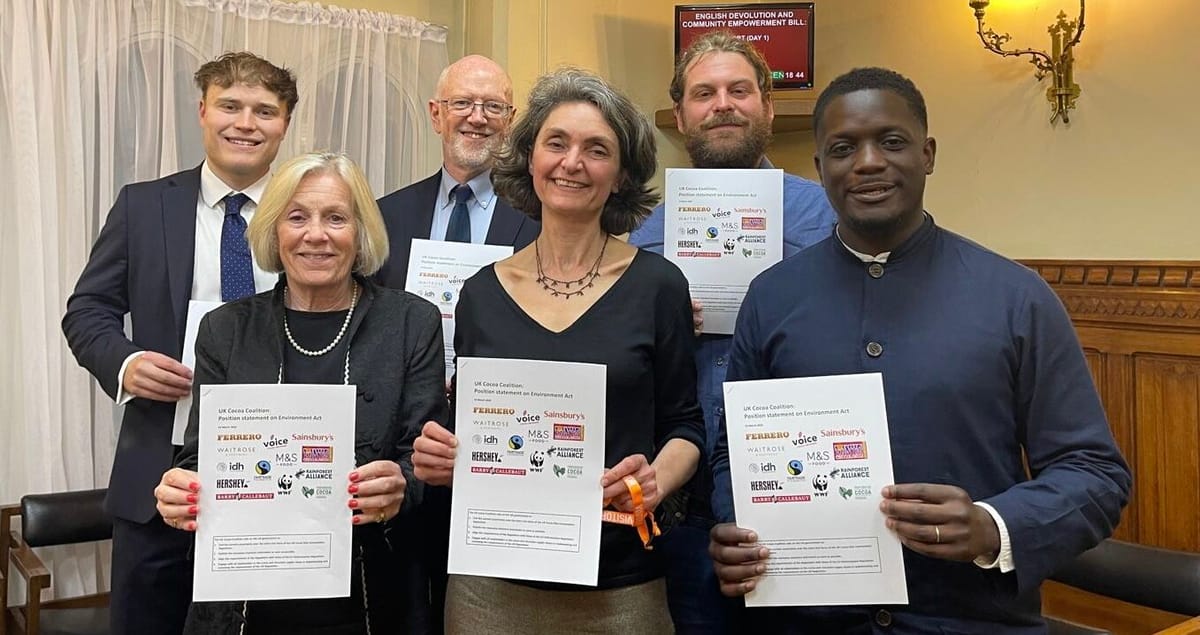


 Clay Gordon
 Clay Gordon
 Clay Gordon
 Donna Eastlake
 Clay Gordon
 Clay Gordon